
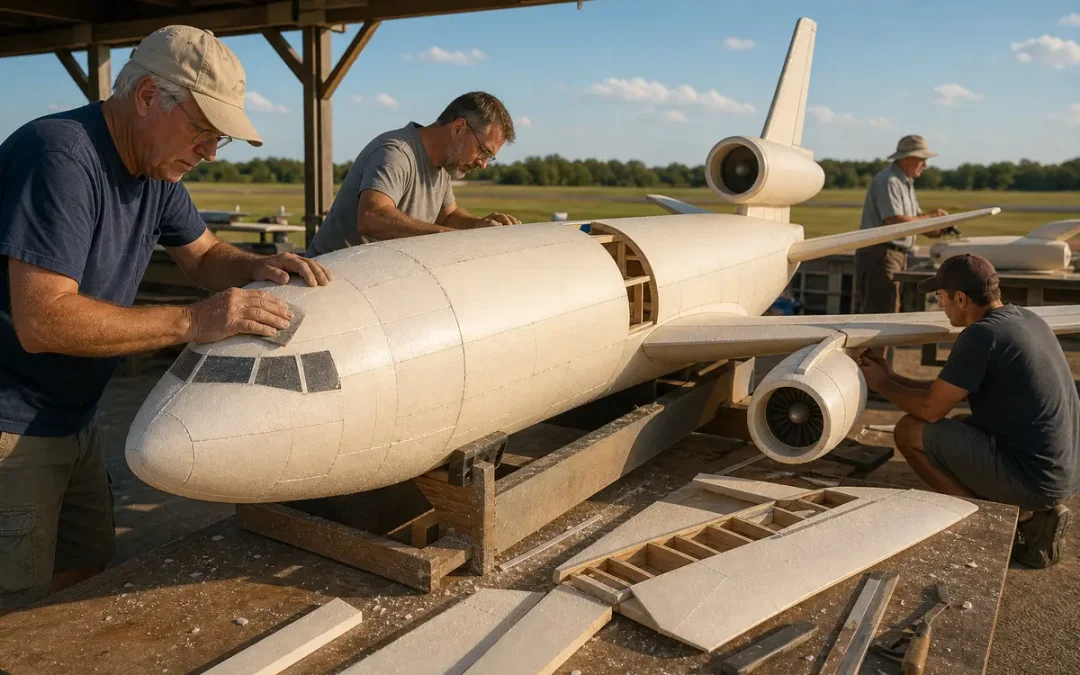
Short Answer: Yes—A Giant Foam DC-10 Was Built and Test-Flown in One Day
According to the original Radical RC report and its two videos, Kasper Holger and Keld Hansen of MFK Falken built a giant foam DC-10 at a jet meet and got it test-flown before the day was over. The accomplishment is easier to appreciate when the numbers are on the table: a 504 cm wingspan, a 556 cm length, and a 23 kg flying weight.
It was an audacious build-day question with a very model-aircraft answer: choose a simple, fast-build material, keep the goal clear, and accept that the first flight is a test rather than a finished scale-display routine.
What Was the Quick-Build DC-10 Made From?
The airframe was built from styrofoam at the MFK Falken event. The original post identifies the subject as an SAS OY-KDB DC-10, while the finished model’s livery is less important here than the construction challenge. That choice of material made the one-day schedule possible, but it also demanded restraint. A foam jet this large has to be strong enough for handling and landing loads without carrying so much reinforcement that the power system can no longer do its job.
The builders, Kasper Holger and Keld Hansen, were working toward a flight demonstration, not a museum-perfect finish. That distinction is the heart of the project’s appeal.
How Big Was the Model?
| Published specification | Value |
|---|---|
| Scale | 1/10 |
| Wingspan | 504 cm (5.04 m) |
| Length | 556 cm (5.56 m) |
| Height | 170 cm |
| Fuselage diameter | 60 cm |
| Weight | 23 kg |
| Power | Simjet 3000 |
These figures are retained from the original post, with “Heith” corrected to “Height” and “Fuse diameter” expanded to “Fuselage diameter.” They describe this event model, not the specifications of a full-size DC-10. Boeing’s aircraft history reference is useful background on the full-size airliner.
How Did the Build Become a Flight?
The videos show the project in the order that makes the story compelling: material and structure first, a huge recognizable silhouette next, and a test flight at the end. A same-day flight leaves no room for casual assumptions, so the important work is the quiet work—checking the controls, confirming the power installation, and making sure the model can be handled safely around the flight line.
The sensible way to copy the spirit of this project is to copy its discipline, not its deadline. Set a flight-readiness checklist before the build begins, and let the checklist—not the clock—decide whether the model flies.
What Can Model Builders Learn from It?
- Define the minimum successful result: a controllable test flight, not a completed competition finish.
- Choose materials and construction details that match the schedule and the expected loads.
- Protect the weight budget from the beginning; large foam models can become heavy surprisingly quickly.
- Plan transport, assembly, battery access, and recovery before the airframe is closed up.
- Keep spectators and other models clear, and have a real abort plan for the first flight.
Watch the Build and Flight
The original videos remain available as the DC-10 build and flight video and the second DC-10 video. They are the best way to see the scale of the foam construction and the event setting that a specification table cannot convey.
What Should You Plan Before a Large Foam Jet?
Start with the flight site, the launch and landing direction, and the people who will help. Then work backward through propulsion, control throws, battery access, and structural checks. Radical RC’s wood and foams, adhesives, CA, and epoxy, and tools and equipment categories are useful companions for the build side of the project.
A 1/10-scale DC-10 built in a day sounds like a dare. The original post’s own verdict was wonderfully understated: “Let’s just for a ride… Alrighty then.” The lasting lesson is more constructive: a clear objective, experienced builders, and a safe test plan can turn an improbable model into a memorable flight.