
Short Answer: Phil’s Wren Used a Geared 4,000 kV Power System
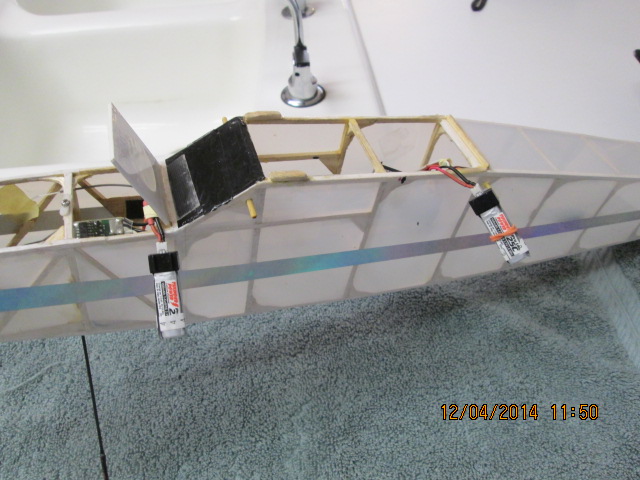
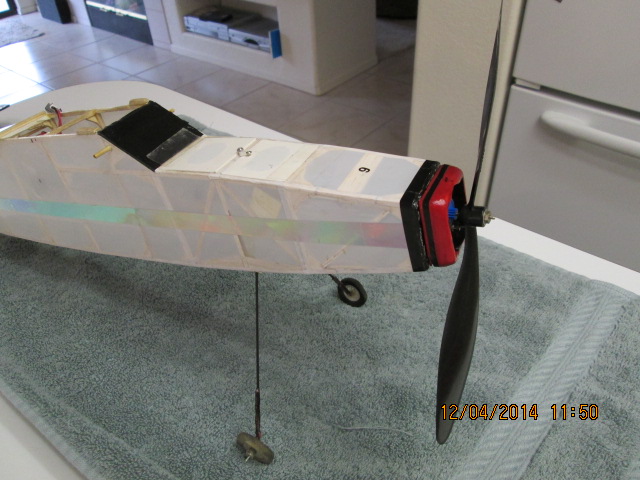
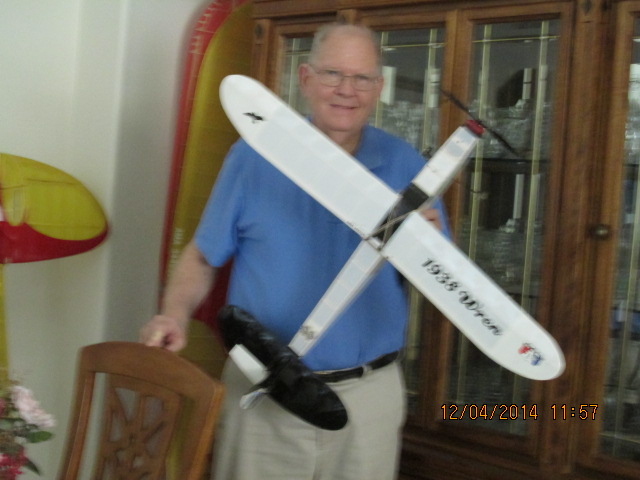
The documented test used Phil Pearce’s five-ounce Wren with a 4,000 kV 12 mm Afterburner brushless motor, a GWS LPS gearbox reported as 4.8:1, and a GWS 9×7 propeller. Phil reported about 1.5 amps at full power, about 1 amp during the low-power climb and cruise, and motor slowdown after roughly 8–10 minutes without thermal help. This is a historical test of one very light model, not a universal power-system recommendation; the airframe, battery rules, propeller, gearing, and motor all affect the result.
What Was the Recorded Spirit of Sam Setup?
The equipment and conditions below are preserved from Phil Pearce’s report and the original article notes. They describe the 2014 test and should not be treated as current event rules.
- Model: a five-ounce Wren built for the Spirit of Sam event at Society of Antique Modelers events.
- Power battery: the article records an event rule requiring one 160 mAh LiPo for the model’s power.
- Radio power: a separate rear LiPo was used and the motor system’s BEC was disabled.
- Motor: an Afterburner high-performance brushless motor identified in the report as MR-012-030-4000-1.5, with a 1.5 mm shaft.
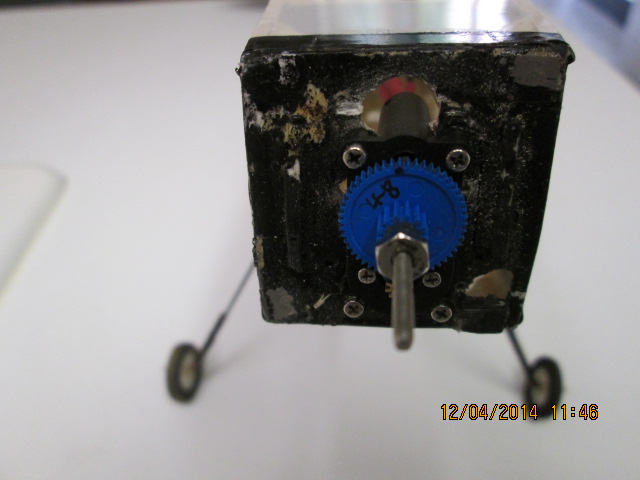
- Gearbox: a GWS LPS gearbox, reported in the article as a 4.8:1 ratio.
- Propeller: a GWS 9×7 propeller; the report says a folding propeller was not allowed.
How Did Phil Pearce Conduct the Endurance Test?
Phil described a repeatable flight routine rather than running at full throttle for the entire flight:
- Hand-launch at full power, with a reported draw of about 1.5 amps.
- Establish a slight climb at approximately 1 amp.
- Level out at about 200 feet and use only enough power to maintain altitude while watching for lift.
- Without thermal help, watch for the motor to begin slowing after roughly 8–10 minutes.
- Start the landing approach while the propeller is still turning and plan to land in about 15 seconds.
The article also records that the event used the second-best flight time from two flights. Confirm the current event rules separately before relying on that detail in a competition.
What Does the Test Suggest About Motor KV and No-Load Current?
Author’s interpretation: the original notes recommend staying with the 4,000 kV motor and avoiding a higher-kV Afterburner because its higher no-load current could consume too much energy during partial-throttle endurance flight. The notes also speculate that a higher-kV motor might be more efficient at wide-open throttle but still be a poor choice for this contest.
Speculation and limitation: this conclusion was not presented as a controlled comparison of two motors in the same model. No-load current is a motor parameter, but the usable endurance result also depends on the propeller, gearbox, battery voltage, throttle setting, and airframe. Measure the actual system before treating the idea as a recommendation.
Which GWS LPS Parts Match the Recorded Arrangement?
The live GWS gearbox category is the best starting point for current LPS drive-system parts. The article records a 4.8:1 gearbox, while the linked B-ratio replacement parts are described as a 10-tooth pinion and a 50-tooth spur gear. Those tooth counts produce a nominal 5:1 ratio, so verify the exact ratio and parts installed in the photographed model before reproducing the setup.
The current GWS LPS B 10T, 1.5 mm pinion and LPS B 50T blue spur gear match the tooth-count description in the original parts list. For the voltage alternatives, the GWS LPS RLC power system listing describes a 4.8 V system for 1S LiPo, while the GWS LPS RXC power system listing describes a 7.2 V system for 2S LiPo. These are different voltage options, not interchangeable proof of the exact tested Afterburner installation.
The currently listed 12 mm Afterburner motor mounting screws are a relevant accessory. The original motor text is retained as a historical model identifier, but its old product link was malformed and no current 12 mm/4,000 kV motor listing was found in the live Afterburner search.
What Should Be Verified Before Rebuilding the System?
- Confirm the current Spirit of Sam rules and the permitted battery arrangement.
- Check the motor shaft, pinion bore, spur gear, and actual gearbox ratio as a matched set.
- Measure current with the intended battery, propeller, gearbox, and throttle range; do not infer it from kV alone.
- Confirm propeller clearance, landing behavior, and a landing plan for a stopped or windmilling propeller.
- Recheck current product specifications because this article documents a 2014 installation.
Why Preserve This Spirit of Sam Power-System Record?
This page preserves Phil Pearce’s measured observations and the author’s clearly labeled ideas so the setup remains available for comparison instead of depending on memory. The reported 1.5-amp launch draw, approximately 1-amp cruise, 200-foot leveling point, and 8–10-minute no-thermal result belong to Phil’s very light Wren and its specific installation. They are useful reference data, not guaranteed performance for another model.