
Short Answer: Match the Drill to the Thread or Fastener
For a tapped hole, choose the tap-drill size for the exact thread shown in the chart. For a clearance hole, choose a drill that lets the fastener pass through while giving you the fit you want. There is no single “right” bit for every screw, material, or job.
A few minutes spent checking the thread, material, and fit can save a broken tap and a loose or crooked fastener. The goal is simple: drill it right the first time and make a useful, strong joint.
What Is the Difference Between a Tap Hole and a Clearance Hole?
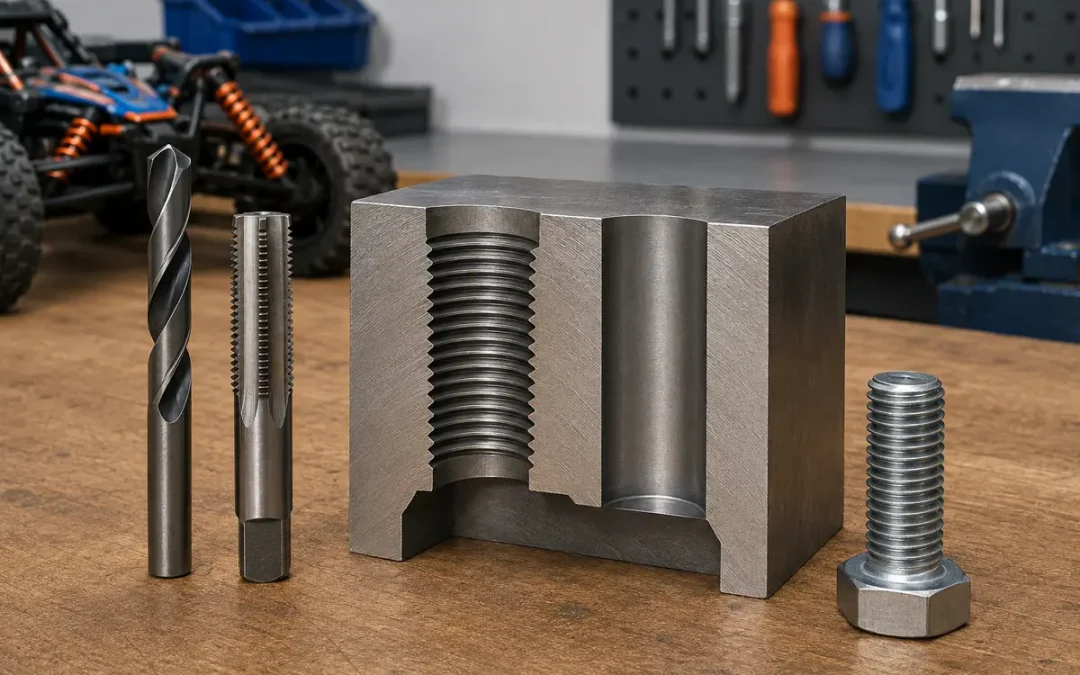
- A tapped hole is drilled undersize first, then threaded with a tap. The finished threads grip the screw.
- A clearance hole is large enough for the screw or bolt to pass through. The screw is held by a nut, threaded insert, or the part on the other side.
That distinction is easy to lose when working quickly on an RC model. A drill size that is correct for tapping will usually be too small for a free-passing clearance hole.
How Do You Use a Tap-Drill and Clearance-Hole Chart?
- Identify the fastener’s thread standard, diameter, and pitch. Do not mix an inch thread with a metric row.
- Decide whether the hole will be tapped or whether the fastener must pass through.
- For a tapped hole, use the chart’s recommended tap drill as a starting point. For a clearance hole, choose the fit category that matches the job.
- Check the material and the depth available. A delicate plastic part and a steel bracket do not behave the same way.
- Test the size on scrap or an inconspicuous area when the part is valuable, thin, or difficult to replace.
Charts are starting points, not permission to force a tap. Use cutting fluid or the lubricant appropriate to the material, keep the bit square, clear chips, and back the tap out as needed. The tool manufacturer’s instructions take priority over a generic chart.
Why Do Material and Fit Matter?
More thread engagement is not automatically stronger. A soft material may need more engagement or an insert, while a thin section may not have enough depth for the nominal recommendation. A tight clearance hole may hold a part accurately but make assembly difficult; a loose hole may assemble easily but allow movement.
For RC work, also check the head style, washer, nut, access for a driver, and whether vibration can loosen the joint. A screw that fits the hole can still be the wrong length or lack enough thread engagement.
Where Did the Original Chart Come From?
The original Radical RC post pointed readers to a Stanford-hosted “Tapping and Clearance Hole Chart” and described it as a useful way to choose a drill bit for threading or a fastener clearance fit. That old Stanford URL now redirects and is not reliably accessible, so it should be treated as a historical reference rather than the working source for a new project.
For a current manufacturer reference, see the OSG official charts, including its tap-drill and thread-limit charts. Select the chart that matches the fastener and application instead of copying a size from an unrelated row.
RC Workshop Sanity Check
- Measure an unknown screw with a thread gauge or compare it with a known fastener.
- Keep metric and inch drill indexes separate and labeled.
- Deburr the hole without removing more material than the fit allows.
- After tapping, clean chips from the hole before installing the screw.
- Recheck critical joints after the first few flights and after any hard landing.
Frequently Asked Questions
What is a tap drill?
A tap drill is the bit used to make the pilot hole before cutting internal threads. Its size depends on the thread diameter, pitch, desired thread percentage, and material.
What is a clearance hole?
A clearance hole allows a screw or bolt to pass through without cutting or gripping its threads. The needed size depends on whether the fit should be close, normal, or loose.
Can one drill size work for every material?
No. The chart’s recommendation may need adjustment for plastic, soft aluminum, thin sheet, a blind hole, or a joint that needs an insert. Test the fit and follow the tool and material manufacturer’s guidance.
Related Radical RC Resources
Browse Radical RC’s hardware and calculators and charts for more workshop references.
Dave